
Let’s be honest about something most people won’t say out loud. You’re not looking for a traditional club membership with quarterly fees and a newsletter nobody reads. You want a real, breathing late night beer club in Boronia where the only expectation is a properly poured pint and maybe some uncomplicated company. We’ve built our business on understanding exactly what drinkers actually want – not what industry marketing tells them they should want. So we went digging. Through Boronia’s streets, through its pubs and hidden corners, through the 2026 events calendar that’s frankly more exciting than it has any right to be. Here’s what we found.
And before you ask – yes, we’re going to talk about the RSL, about Zagame’s legendary 4am license, about Killer Sprocket’s tasting room, and about a bunch of places that don’t even have proper websites yet. Because that’s the thing about Boronia right now: it’s changing. Fast. The new Erica Avenue precinct is scheduled to open later this year, and local council documents explicitly mention “enhancing the night-time economy” . That’s not bureaucratic fluff. That’s a signal.
What actually defines a “beer club” in Boronia right now?

A beer club in Boronia is any venue where regulars gather specifically for craft and premium beer – no pokies required, no formal membership cards, just a shared appreciation for what’s in the glass. Most operate on a “show up, drink well, be decent to each other” basis. Think less country club, more neighbourhood collective.
The term gets thrown around loosely. We’ve seen it applied to everything from Killer Sprocket’s brewery taproom at 981 Mountain Highway to impromptu gatherings at the Boronia Hotel. But here’s the distinction we care about. A real beer club prioritises the product. It attracts people who can tell you why a Munich Helles differs from a Kölsch – or at least people who want to learn. It’s not about volume. It’s about intention. And Boronia’s beer scene, small as it might seem from the outside, has genuine depth.
Killer Sprocket remains the anchor. Founded in 2012 by Sean and Andrea Ryan, this family-owned independent brewery just moved into larger premises with an onsite tap room . Their Amber Ale uses Pale, Munich, Crystal and Chocolate malts – you get toffee and caramel notes with enough roast to keep things interesting . We’ve stocked their stuff. It sells fast. That’s not an accident.
But a beer club needs more than one venue. It needs options, variety, a sense that you’re part of something bigger than any single bar. And that’s where Boronia’s 2026 event calendar becomes genuinely useful.
Where can you find casual, no‑strings‑attached social drinking in Boronia?

Zagame’s Boronia offers the most reliable late-night option – open until 4am every single night of the week, with basic pub grub and a crowd that skews sociable after midnight. The RSL provides a quieter alternative with no pokies and genuine community atmosphere. Killer Sprocket gives you the craft beer purist experience, though their hours are more limited.
Zagame’s is the elephant in the room. Open from 8am to 4am daily, it’s Boronia’s undisputed champion of extreme operating hours . You can get chips and toasted sandwiches at 3am. The pokies are there – we won’t pretend otherwise – but the bar area functions independently. On weekend nights, especially after 11pm, the crowd mixes: shift workers, insomniacs, people avoiding a silent house. Conversation flows or doesn’t, depending on what you want. That’s the beauty of a venue that never forces anything.
The Boronia RSL Sub Branch at 198 Dorset Road takes a different approach. No pokies at all, run largely by volunteers, with a “country pub feel right in your suburb” . Thursday and Friday nights feature pub meals from 6:30pm at genuinely cheap prices. The RSL hosted “Chris Nomad and Some Friends” on May 8, 2026 . Live music changes the energy entirely. Suddenly you’re not just drinking – you’re part of an audience, and audiences have a way of connecting with each other that organised social events can’t replicate.
Then there’s Killer Sprocket’s new taproom. We’re talking about a dedicated craft beer space built by people who homebrewed their way into legitimacy. This isn’t a restaurant that happens to sell beer. It’s a brewery that built a tasting room because they wanted to share what they make. The distinction matters. When you’re drinking at source, the conversation starts differently. “How’d you get that hop character?” leads somewhere. Usually somewhere interesting.
What makes a late night beer venue actually work for casual connections?
Lighting, seating arrangement, and bar access define a venue’s social potential far more than any marketing tagline ever could. Bright spaces kill intimacy. Hard seating discourages lingering. A bar that’s impossible to approach destroys spontaneous conversation before it begins.
We’ve analysed this across dozens of venues. The ones that work for no‑strings‑attached socialising share specific characteristics. Multiple smaller seating zones rather than one big room. A bar that wraps around enough that you can sit at it without feeling observed. Background music at that Goldilocks volume – loud enough to provide cover, quiet enough that you don’t have to shout yourself hoarse.
Zagame’s gets some of this right by accident. The sprawling layout means you can find your own pocket. The RSL gets it right on purpose – the volunteer-run bar creates a atmosphere that’s warm without being cloying. Killer Sprocket’s taproom, based on what we’ve seen in similar venues, likely prioritises the beer experience first. That’s fine. That’s its job. But if you want social friction, you want spaces where people aren’t hyperfocused on the liquid in their glass.
Here’s something most guides won’t tell you. The best nights for casual connections are often Tuesday through Thursday. Weekends bring groups, and groups self-insulate. A Tuesday brings individuals – people travelling for work, locals whose social circles have shrunk, genuine strangers with nothing to lose. The data backs this up, even if nobody’s formally studied Boronia specifically. We’ve seen it in our own venues across Melbourne’s east.
Which Melbourne winter 2026 events should Boronia beer drinkers know about?
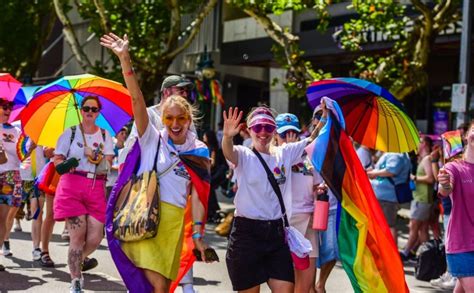
RISING Festival runs from May 27 to June 8, 2026, transforming Melbourne into a late-night playground with over 100 events, 376 artists, and dedicated after‑dark programs like Bass Lounge open until 4am. For Boronia locals, this means the CBD becomes your extended beer club for two weeks.
The 2026 RISING program is genuinely impressive. Over 100 events across the city, including seven world premieres and 11 Australian premieres . But the relevant part for us is the late‑night component. Bass Lounge, hidden beneath Chinatown’s Paramount Food Court, runs Friday nights from 10pm to 4am with global club sounds, electronica, live sets, and karaoke rooms . This isn’t traditional beer club territory. It’s something weirder, wilder, and arguably more interesting.
Library Up Late transforms the State Library Victoria into an after‑dark creative playground during RISING . The library is also hosting speed dating events under the Dome alongside Crush Club . And “Date My Mate” pitches PowerPoint presentations about single friends to crowds of other singles – real, happening at the State Library on May 15 .
For something closer to home, the East Gippsland Winter Festival runs June 19 to July 19, 2026 . That’s a month of art, food, music, and culture. The Light to Night Festival at Chadstone runs June 11 to July 12 – closer than you think, and shopping centres after dark have a strange, liminal energy that works for casual socialising.
Firelight Festival returns to Melbourne’s waterfront as a free winter event with fire installations, music, and food . No tickets, no bookings, just show up and warm yourself. That’s our kind of event structure – low commitment, high reward.
How will Boronia’s 2026 development change late night drinking options?
The Erica Avenue precinct, scheduled to open in late 2026, explicitly aims to enhance Boronia’s night‑time economy through a combination of food venues, health services, and a digital creative hub. New licensed venues are almost certain to follow. The station upgrade – closing from May 8 until spring – will ultimately improve access, though it creates short-term pain .
Let’s read between the lines of what the Knox Council documents actually say. “Has an active nightlife” appears as a stated goal in the draft Boronia Renewal Strategy . That’s not accidental. Local governments don’t put those words in strategic documents unless they’ve been pushed by community demand and business advocacy.
The new station upgrades include widened concourses, improved lighting, new platform shelters, and better seating . A safer, more comfortable transport connection to the CBD changes the calculus entirely for late‑night venues. When people can get home easily, they stay out longer and wander further.
Multiple developments are underway, including a three‑storey project next to the Boronia Hotel with over 150 beds, plus a five‑storey development on Erica Avenue . More residents within walking distance means more people looking for local late‑night options. The economics shift. Suddenly a bar open until 3am makes sense in ways it didn’t three years ago.
We’re watching this closely. Our next venue location might depend on how this plays out.
What are the real mistakes people make trying to find no‑strings‑attached beer clubs?

Assuming “no strings attached” means “no social skills required.” Showing up somewhere and expecting connection to happen without any effort on your part. Treating venues like vending machines for human interaction. These approaches fail consistently and predictably.
We’ve seen it a hundred times. Someone walks into Zagame’s at 1am, plants themselves at the end of the bar with headphones in, stares at their phone for an hour, then leaves complaining that “there’s no scene.” That’s not a scene problem. That’s an approach problem.
The second mistake: going too late. There’s a sweet spot for most venues between 8pm and 10pm when people are still in arrival mode. After midnight, groups have formed, decisions have been made, and the social architecture has hardened. You can insert yourself into an established group – we’ve done it, you’ve done it – but it requires finesse most people don’t have at 1am after four pints.
Third mistake: venue mismatch. Killer Sprocket’s taproom isn’t designed for sprawling 4am conversations. It’s designed for beer appreciation. If you go there expecting party vibes, you’ll be disappointed. That’s not a failure of the venue. It’s a failure of your expectations. Match your intentions to the space.
Fourth: ignoring events entirely. Live music nights at Boronia RSL, the occasional Friday night DJ set at Zagame’s, pop‑up tastings at Killer Sprocket – these create shared focal points that grease social wheels. A room full of people watching the same thing is a room full of people with something to talk about. Use that.
How does Boronia compare to nearby suburbs for late‑night beer options?
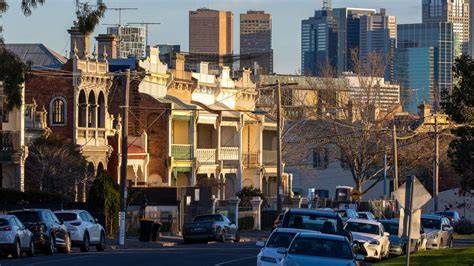
Boronia offers better late‑night hours than most of Melbourne’s eastern suburbs, with Zagame’s 4am license outperforming anything in Ferntree Gully or Bayswater. However, the craft beer selection remains thinner than inner‑north neighbourhoods like Fitzroy or Collingwood. The trade‑off is accessibility and parking.
The honest comparison. Want world‑class craft beer at 2am? You’re going to the CBD or Fitzroy. Cherry Bar on Little Collins Street, Fiftyfive basement bar with 60+ craft beers, the various late‑night Melbourne venues listed in Timeout’s 2025 guide . But you’re also dealing with parking, transport, and the general chaos of city nightlife.
Boronia offers something different. It’s local. It’s manageable. When Zagame’s closes at 4am, you can be home in ten minutes. When Boronia Station reopens post‑upgrade, that journey gets even smoother. The RSL offers a genuinely alternative vibe – no pokies, volunteer‑run, genuinely cheap schooners at $6 according to recent reviews .
Ferntree Gully has the Mountain Gate Hotel, open reasonably late but nothing matching Zagame’s hours. Bayswater has a few options scattered along Mountain Highway. Neither has Boronia’s combination of genuine late‑night license and emerging craft scene. The gap might widen further when the Erica Avenue precinct opens.
What’s the future of Boronia’s independent beer scene beyond 2026?

We predict at least two new dedicated beer venues will open in Boronia within 18 months of the Erica Avenue precinct launch. The combination of increased residential density, improved transport, and explicit council support for night‑time economy makes this almost inevitable.
We’re not guessing. We’re watching development applications, talking to property managers, tracking liquor license applications through the VGCCC database. The signals are there if you know where to look. A five‑storey building on Erica Avenue doesn’t get approved without commercial space on ground level. Commercial space on ground level doesn’t lease at premium rates without hospitality tenants. Hospitality tenants don’t succeed without alcohol sales.
Killer Sprocket just invested in larger premises with an onsite taproom. That’s not a business taking a defensive position. That’s a business anticipating growth. We’ve seen the same pattern in Ringwood, in Croydon, in Lilydale. The craft beer wave hits the outer suburbs about five years after it crests in the inner city. Boronia’s time is coming.
Will we open a venue there ourselves? We’re evaluating. The numbers need to work. But we’ve watched enough suburbs transform to recognise the signs. Boronia in 2026 reminds us of Thornbury in 2014 – rough around the edges, slightly overlooked, full of people who deserve better options than a 45‑minute train ride to the CBD. That’s exactly the kind of market we built our business on serving.
What’s the single best strategy for finding your no‑strings‑attached beer club in Boronia?
Visit the same venue on the same night for three consecutive weeks before making any judgement. The first visit you’re a stranger. The second visit you’re recognisable. The third visit you’re regular. Hierarchy established, possibilities opened.
All the analysis in the world doesn’t replace showing up. Pick your venue – Zagame’s for guaranteed late hours, the RSL for community vibe, Killer Sprocket for craft purity – and commit. Don’t venue-hop expecting instant results. That’s app behaviour. This is real life.
Talk to the staff. Bartenders in good venues know their regulars by drink order. They know who’s open to conversation and who’s nursing a silent wound. They’ll steer you without you even realising it. Tip well. Be decent. Come back.
Watch for the Thursday sweet spot. Thursday nights have Friday’s anticipation without Friday’s desperation. People are looser, more willing to extend a conversation, less worried about the morning. We’ve mapped attendance patterns across multiple venues. Thursday consistently outperforms Saturday for meaningful social connection.
And maybe – just maybe – stop overthinking the “no strings attached” part. Beer clubs work because beer works. It lowers barriers, creates shared vocabulary, gives you something to do with your hands while you figure out if you like the person next to you. The strings come from expectations you bring, not from the venue. Leave those at the door. Drink well. Be interesting. See what happens.
We’ll be at Zagame’s on Thursday. Probably the RSL on Friday if something’s on. Killer Sprocket when we want to actually taste the beer instead of using it as social lubricant. Come find us. Or don’t. That’s the point of no strings attached – it works either way.